What open source projects need from a website
Lessons from sites for AntennaPod, K-9 Mail, AnySoftKeyboard and other projects run by volunteers.
Contents7
We have built and redesigned websites for several open source projects: the AntennaPod podcast player, the K-9 Mail email client, the AnySoftKeyboard keyboard, the AdAway ad blocker, the Passman password manager and the Open Source Design community. The products are very different. The questions behind each website were surprisingly similar.
Two audiences on the same page
A company website usually speaks to customers. An open source project speaks to at least two groups: people who want to use the software, and people who might help build it.
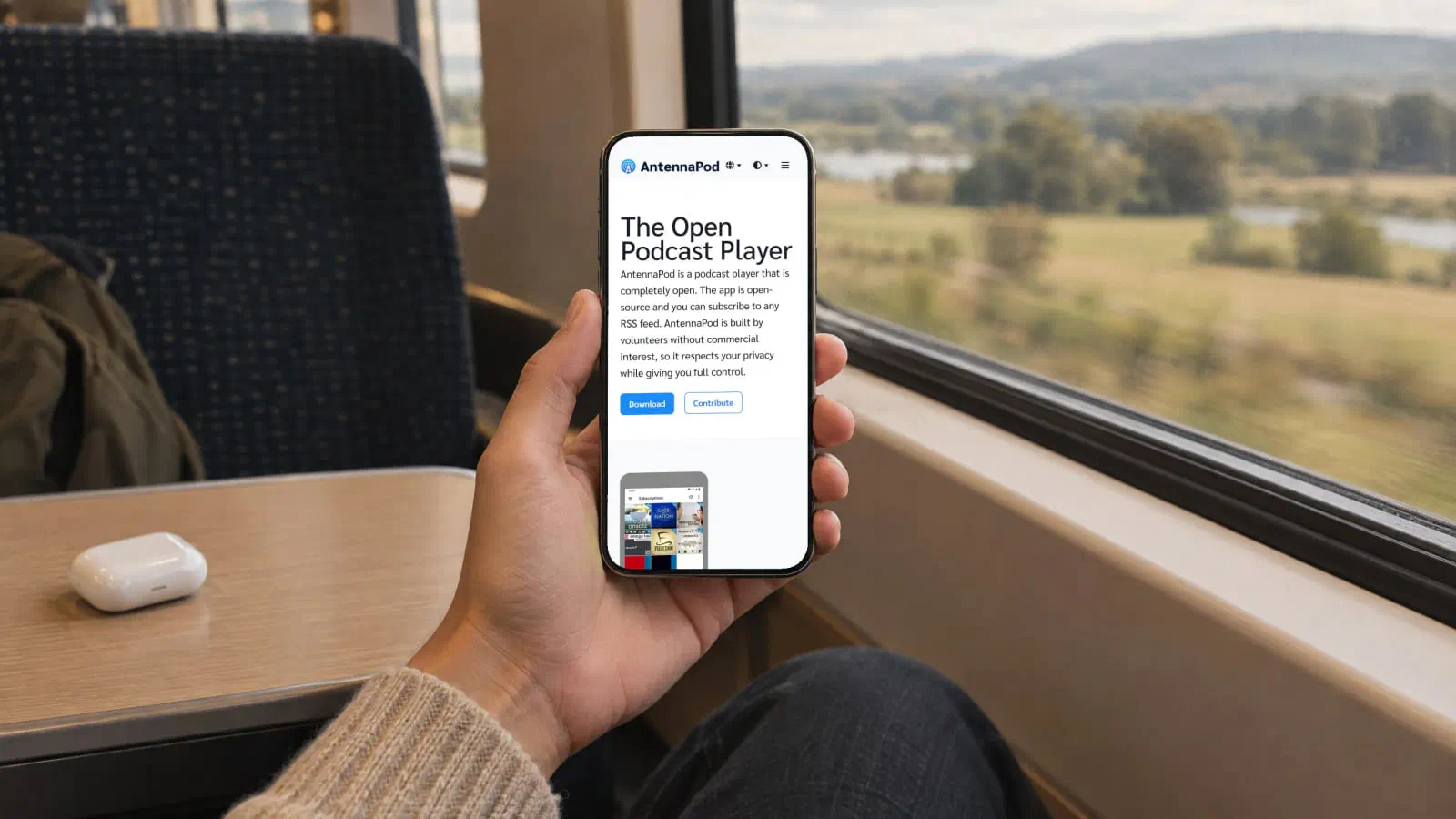
On AntennaPod, we redesigned the feature pages and the routes to each download, then gave the community, documentation and project blog their own clear links. Listeners find the app. Contributors find the forum and the GitHub project without searching through pages meant for listeners.
AnySoftKeyboard had the same split. The site introduces features such as gesture typing, themes and incognito mode, lists the supported languages and then shows new contributors where to start with code and translations.
A useful test: can a first-time visitor say within a few seconds whether the page is for them, and where their next click goes?
Explain the product in the reader’s terms
Open source software is often described by the people who build it, in the language they use with each other. That works on a repository page. It does not always work for someone deciding whether to install the app.
Passman is a self-hosted password manager, so its landing page had to explain self-hosting, encryption and installation to people who may not run their own server. We kept the language plain, then grouped installation, the mobile app, browser extensions and ways to contribute on the same page. Technical readers still find the details. Everyone else is not stopped by them.
Make the site easy for volunteers to maintain
Many projects have no one whose job is the website. Whoever updates it may do so once a month, between other contributions.
That is one reason most of these sites are static. AnySoftKeyboard and K-9 Mail run on Jekyll; Open Source Design is built with Hugo and published through GitHub Pages. There is no CMS login to keep secure and no database to update. A change to the website goes through the same review as a change to the code: someone opens a pull request, someone else checks it, and the site rebuilds.
We explain the general approach in why we build websites with Hugo. For volunteer projects the main benefit is not speed. It is that contributors can fix a typo or add a release note with the tools they already use.
Plan for the project’s next chapter
Open source projects change names, merge with other projects and move to new homes. K-9 Mail became the basis of Thunderbird for Android. The website had to keep its feature information and project news available while sending visitors to Thunderbird for Android for current updates, without confusing people who still knew the old name.
A project site should be able to say “this has moved” clearly. That means stable addresses for old pages, a visible notice where it matters and no broken download links.
Small tools can carry a lot of weight
Not everything on a project site is a page of text. For AdAway, alongside the refreshed site, we recreated the logo as a clean SVG and added a browser tool for converting hosts files. A focused tool like that often answers a question the documentation would otherwise need several paragraphs for.
Communities need routes, not only pages
Open Source Design connects designers with open source projects. Its site has to serve designers looking for work, projects posting roles and members joining events and discussions. We made open jobs, upcoming events, the forum and resources reachable from the homepage and organised the rest by what visitors came to do.
If you run a project
Before a redesign, it helps to write down:
- who uses the software and who contributes to it
- every place people can download or install it
- where contributor documentation, translations and discussion live
- who will maintain the website and how changes are reviewed
You can see these projects in our portfolio. If your project needs a new website, or an older one needs a refresh, get in touch.